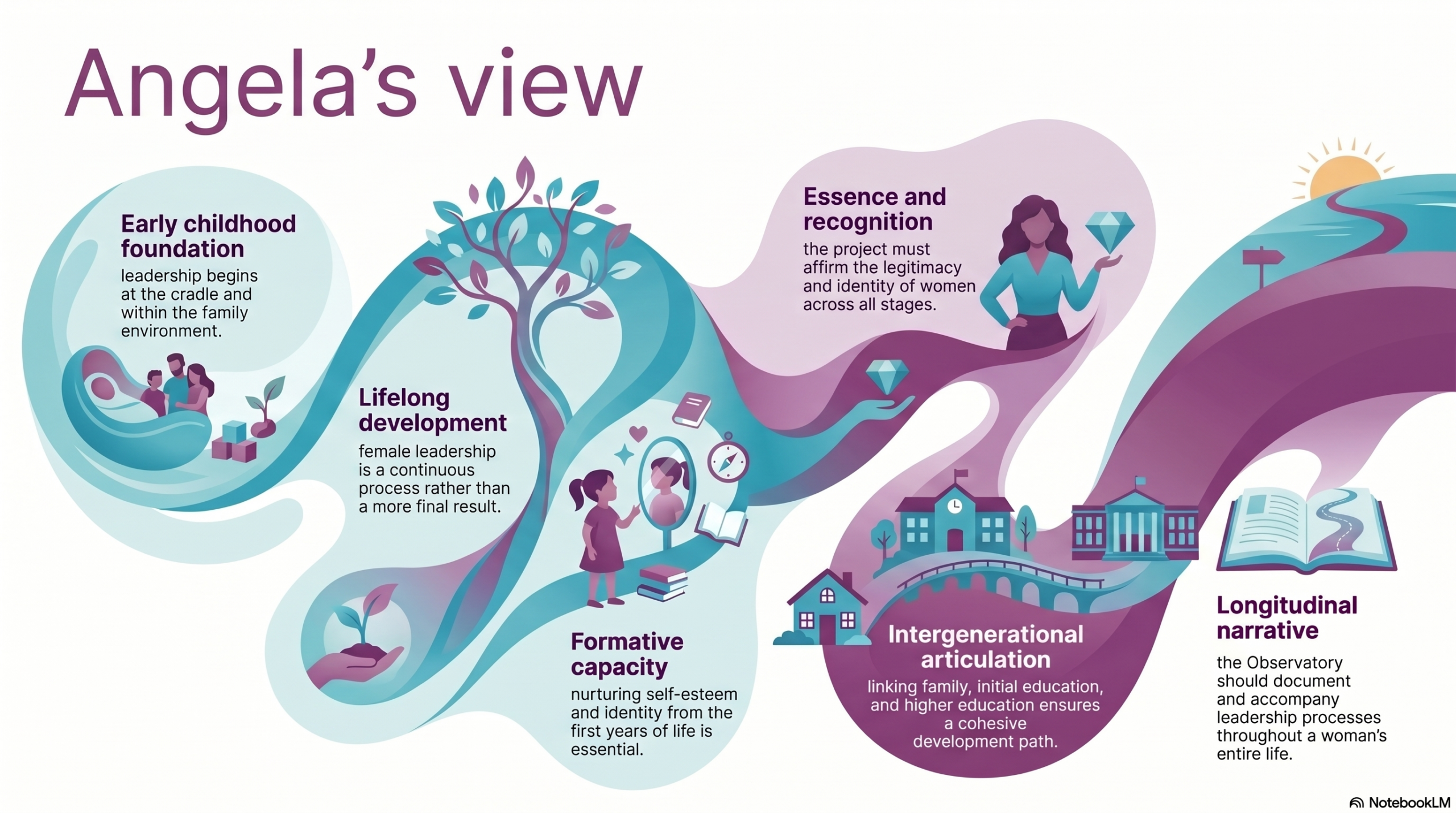
It is important to recognize and affirm the essence of women’s leadership from the ground up, guiding the Observatory toward the construction of a longitudinal narrative that connects childhood, school, and university. This perspective reinforces the need to consolidate a coherent evolutionary process capable of accompanying girls and women throughout their educational and social trajectories, with continuity, a formative intent, and a long-term vision.
“We must strengthen the essence and recognition of women in that leadership from early childhood”.
And the four main aspects are:
Leadership is the central axis of the project.
Early childhood is strategic.
Women’s leadership is an evolutionary process.
The Observatory must work toward long-term continuity.
María Rosa Buenahora
Dean of Dentistry Universidad del Bosque
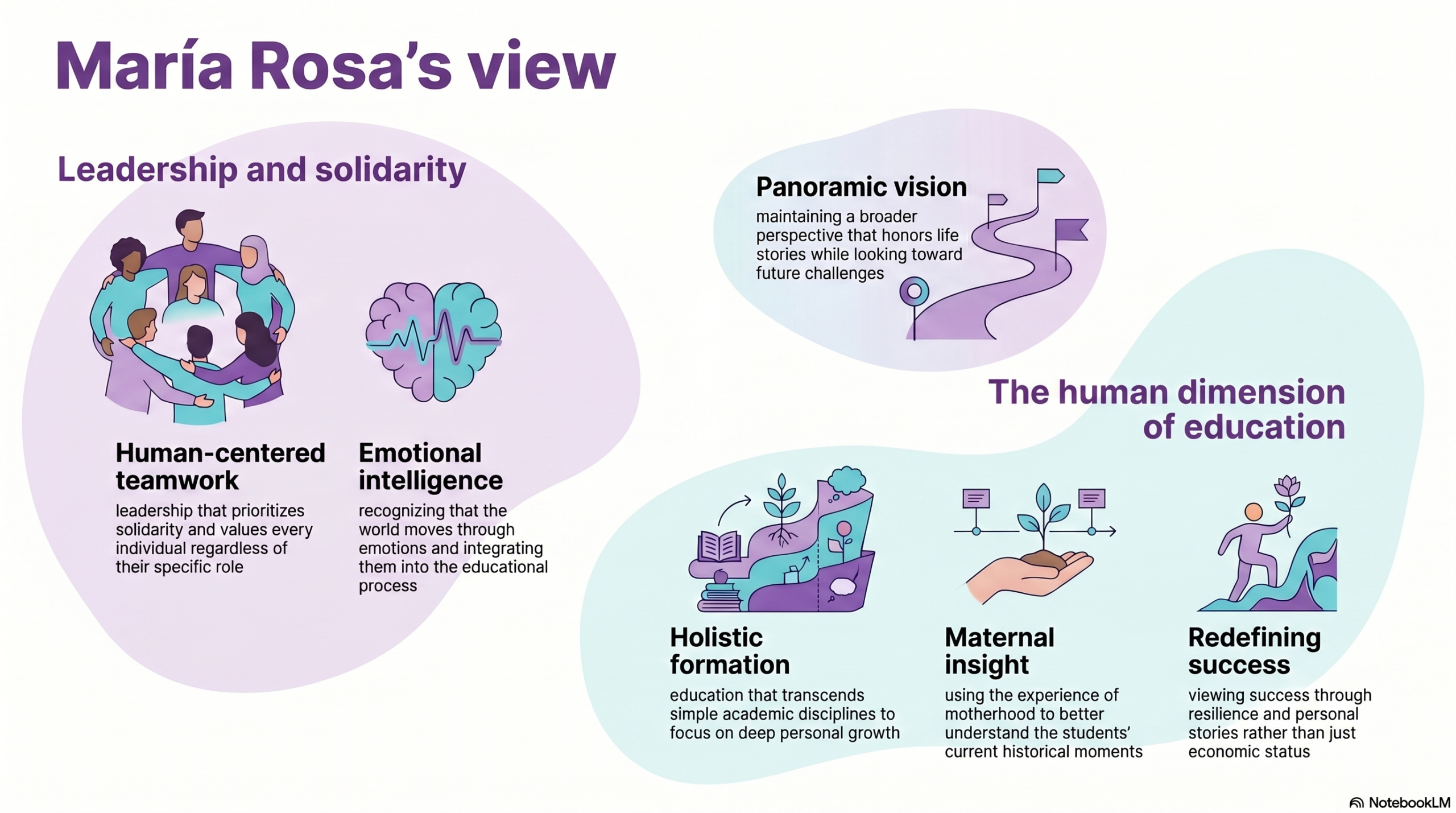
Her definition of Education with a Woman’s Perspective stands out as a profoundly human form of education, grounded in empathy, solidarity, and the recognition of the emotional dimension as an integral part of learning. She particularly values that, drawing from her experience as a woman, mother, and academic leader, she highlights the ability to understand students’ life trajectories and to put oneself in another’s shoes as distinguishing features of educational leadership.
Likewise, she recognizes the importance of questioning educational models focused exclusively on economic success or status, by proposing a broader vision of education oriented toward the holistic development of individuals. This reinforces the Observatory’s role as a space that integrates reason, experience, and emotion to understand and transform education with coherence and human depth.
“An education with a woman’s perspective is a profoundly human form of leadership that integrates empathy, experience, and emotion to transform education beyond economic success toward a holistic understanding of people”.
The four main aspects are:
Emotion is a legitimate and necessary dimension of the educational process.
Women tend to employ leadership styles that value empathy and interpersonal relationships; however, these characteristics can be developed in anyone, regardless of gender.
Education from a woman’s perspective can provide insight into the meaning of success and education.
The Observatory must integrate the human and the affective into its analytical framework.
Jeannette Cristina Rodríguez Torres
Director of Finance, Processes, and Industry Piloto University of Colombia
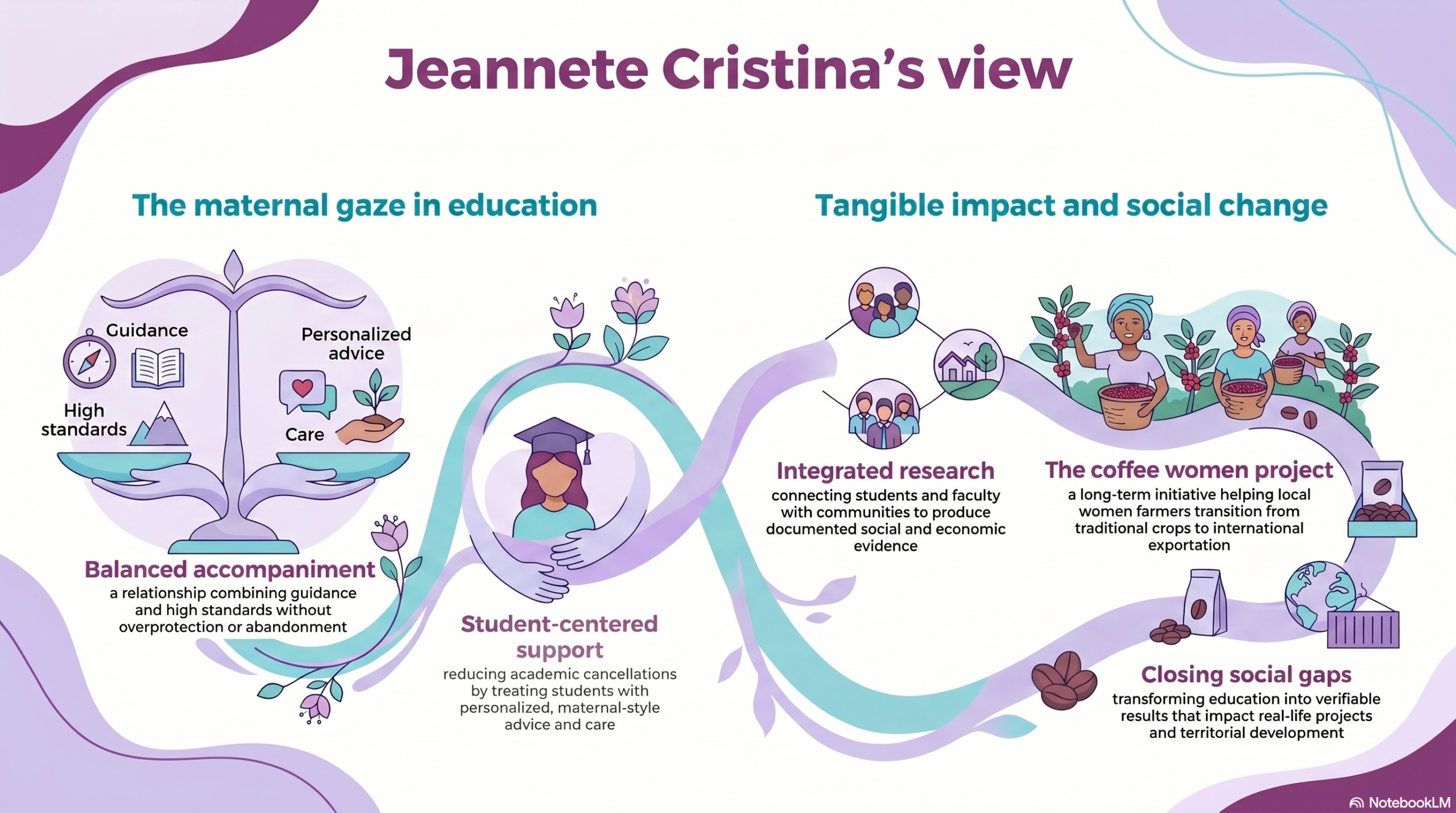
It is important that Education from a Woman’s Perspective be grounded in close and sustained support for educational and productive trajectories, inspired by a logic of care, guidance, and balanced expectations. Education can translate into projects with tangible social impact, such as the initiative developed with women coffee farmers, where the university integrates research, training, and social outreach to help bridge economic and educational gaps.
Likewise, it recognizes the importance of emphasizing the need for evidence, structured processes, and verifiable results. This contribution reinforces the Observatory’s role as a space that systematizes real-world experiences, highlights concrete transformations, and translates academic knowledge into local action with a sustainable and measurable impact over time.
“Education with a woman’s perspective is validated when it generates concrete results and tangible transformations in women’s lives”.
The five main aspects are:
A maternal perspective can translate into effective educational practices.
Transformation is validated when it is tangible and verifiable.
The university can support real-life projects.
Systematization is key to replicating best practices.
The Observatory must showcase complete processes, not just isolated results.
Paula Andrea López López
President Universidad Central
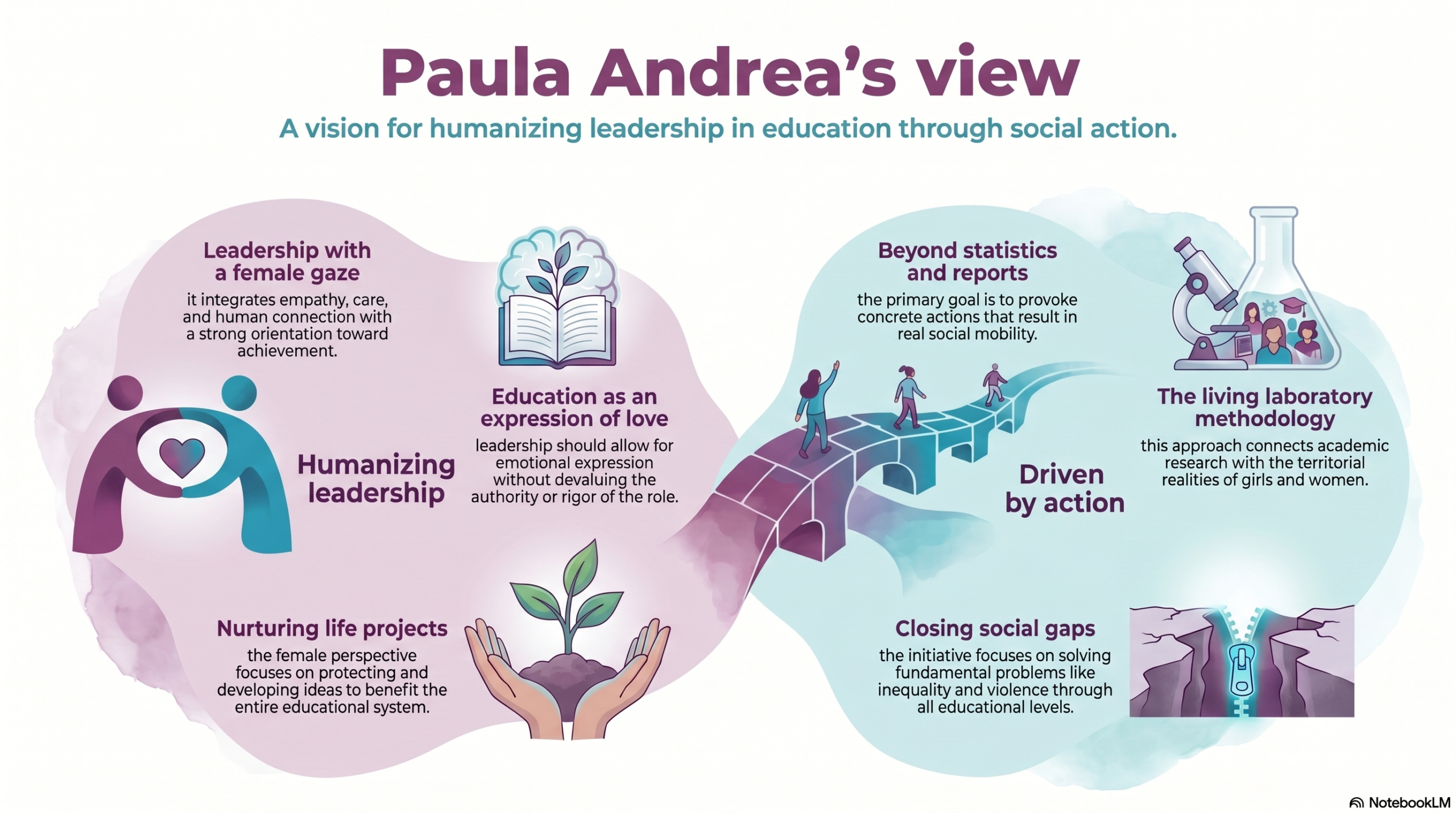
It is significant that Education with a Woman’s Perspective is conceived as a profoundly human endeavor that integrates emotion, leadership, and academic rigor to address social problems that impact girls, young women, and women throughout their educational journeys. This positions the Observatory as a collective space that poses essential questions about living conditions, inequalities, and forms of violence that affect social mobility, recognizing education—from early childhood through higher education—as the primary pathway to transformation.
Likewise, the statement clearly highlights that the value of the Observatory, beyond producing statistics, must spur concrete actions. From this perspective, her contribution reinforces the nature of the living laboratory as the Observatory’s methodology—capable of transforming reflection into real and sustained impact in local communities, by linking knowledge, decision-making, and educational transformation.
“The most important thing I believe the Observatory should do is not to present statistics, but to spur actions that truly transform."
The six main aspects are:
Education is a form of love and social commitment.
Female leadership can integrate emotion and high standards.
The Observatory must provoke action, not just reflection.
The living laboratory is key to transforming realities.
Advocacy must result in real and sustainable changes.
The value of fundamental questions: those that allow us to understand the living conditions, inequalities, and contexts in which girls and women grow up, so that from there, education—from early childhood through higher education—can truly become a pathway to social mobility and the transformation of their life trajectories.
Diana Margarita Pérez Camacho
Rectora Fundación Universitaria Cafam – Unicafam
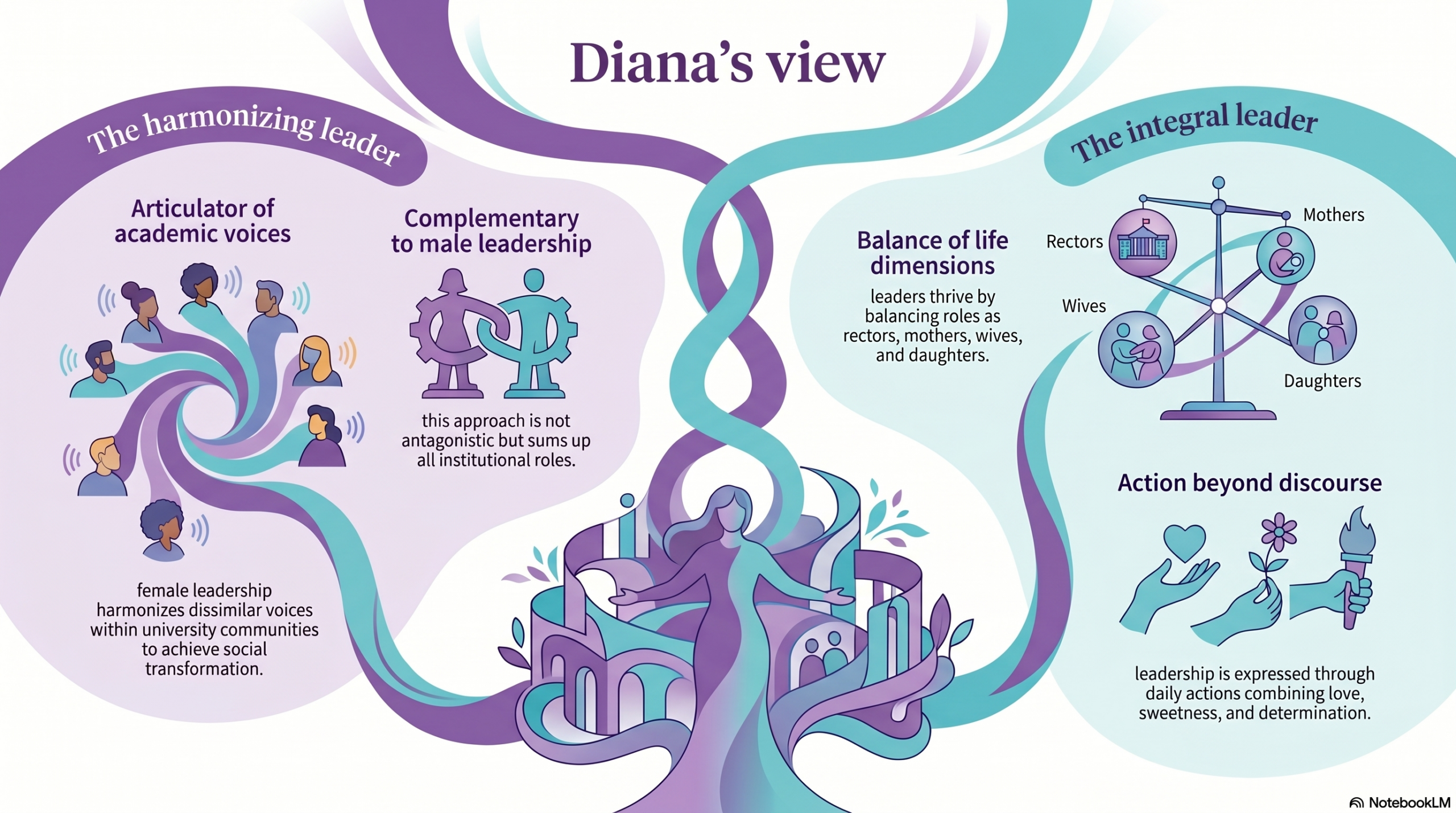
Reflecting on education from a woman’s perspective excites me, as we recognize our role as articulators of the system and promoters of social change.
In university management, female leadership is expressed in two dimensions. The first harmonizes the diverse voices of the academic community without antagonizing male leadership; instead, it integrates all levels under a shared goal: transforming lives to impact society.
The second materializes comprehensive management, where women (mothers, wives, daughters, and rectors) balance their multiple roles without losing coherence. They demonstrate that it is possible to lead with firmness, combining sensitivity and determination.
"We are leaders not only through what we say in our speeches and the decisions we must make as professionals, but also through our daily actions in all dimensions of our lives."
The three central ideas are:
Women act as articulators and harmonizers in the educational ecosystem.
Women’s leadership in universities does not compete, but rather complements and unifies visions toward social transformation.
Effective management requires balancing multiple roles, leading with determination, empathy, and clarity.
Dra. Nancy Williams
Rectora Corporación Universitaria CENDA
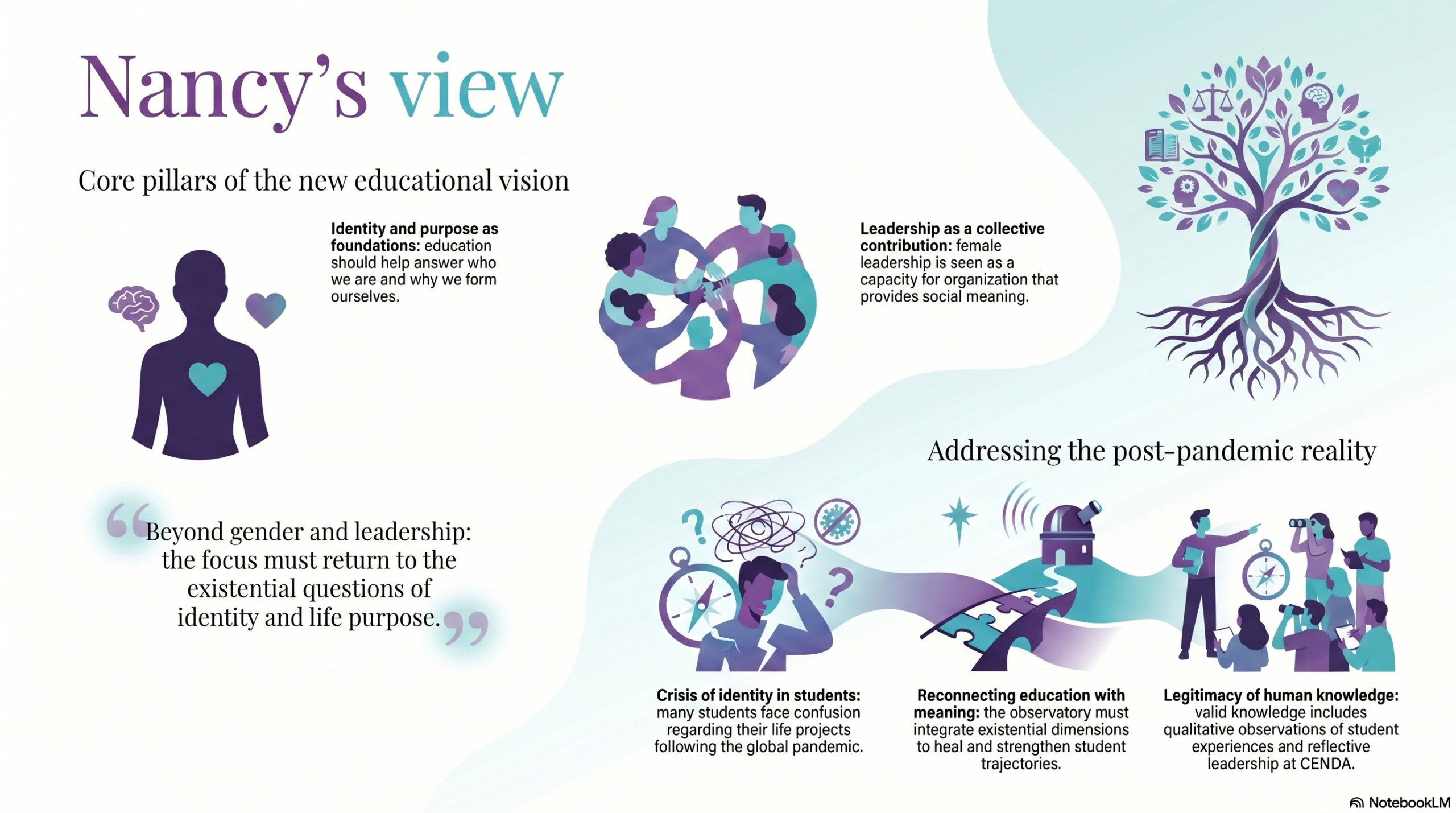
Connecting a woman’s perspective with the purpose of education is challenging and wonderful, considering the organization and leadership that we can contribute.
I had to rethink the question we were asked: “How would you envision this Observatory?” I think it should also have a perspective, a focus, on identity and purpose. Reviewing the presentations you shared (which began in 2019), and as I mentioned when I participated in the Women Breaking Barriers exercise, the focus was oriented towards that: towards women’s leadership and breaking down the gaps in management positions.
However, I believe that after the pandemic we are called to a more challenging moment, marked by new trends and classifications. I say this from my experience with my own students: there is still some confusion regarding how they will define themselves in terms of gender. So, if we want this observatory to be truly enriching, it shouldn’t focus solely on gender or leadership, but rather go a step further: to truly return to that identity and purpose of who we are as women.
The four fundamental aspects are:
The observatory must focus on the identity and purpose of being a woman, not just on leadership or gender.
The post-pandemic era demands updating the initial 2019 approach in light of new trends and challenges.
Students today are experiencing confusion regarding their gender identity.
The essential thing is to return to the core of what it means to be a woman: identity and purpose.